Why Your Outboard Won’t Start
…and when to call a technician.
A non-starting outboard is one of the most common calls we get. In most cases the problem traces back to a few core systems: the battery and cables, the safety switches, fuel, or a sensor.
Common causes of starting problems
- Weak battery. The number one cause. A battery can show 12 volts at rest and still drop too low when it has to crank.
- Corroded cables and poor grounds. Salt air works into battery terminals and engine grounds. Green or white crust means resistance.
- Fuel delivery. Clogged filters, a soft primer bulb, a closed tank vent or contaminated fuel are common in Hawaiʻi.
- Safety switches. The engine will not crank unless the shift is in neutral and the lanyard (kill switch clip) is in place.
- Sensors and fault codes. On modern engines a failed sensor can stop it starting even when everything else looks fine.
What you can check first
- Make sure the lanyard clip is on and the control is in neutral.
- Check the battery switch is on, and look for loose or corroded terminals.
- Squeeze the primer bulb until it is firm. A bulb that stays soft points to an air leak or a fuel supply problem.
- Open the fuel tank vent, and make sure there is fresh fuel in the tank.
- If the engine cranks slowly or just clicks, the battery or cables are the likely cause.
When professional diagnostics are needed
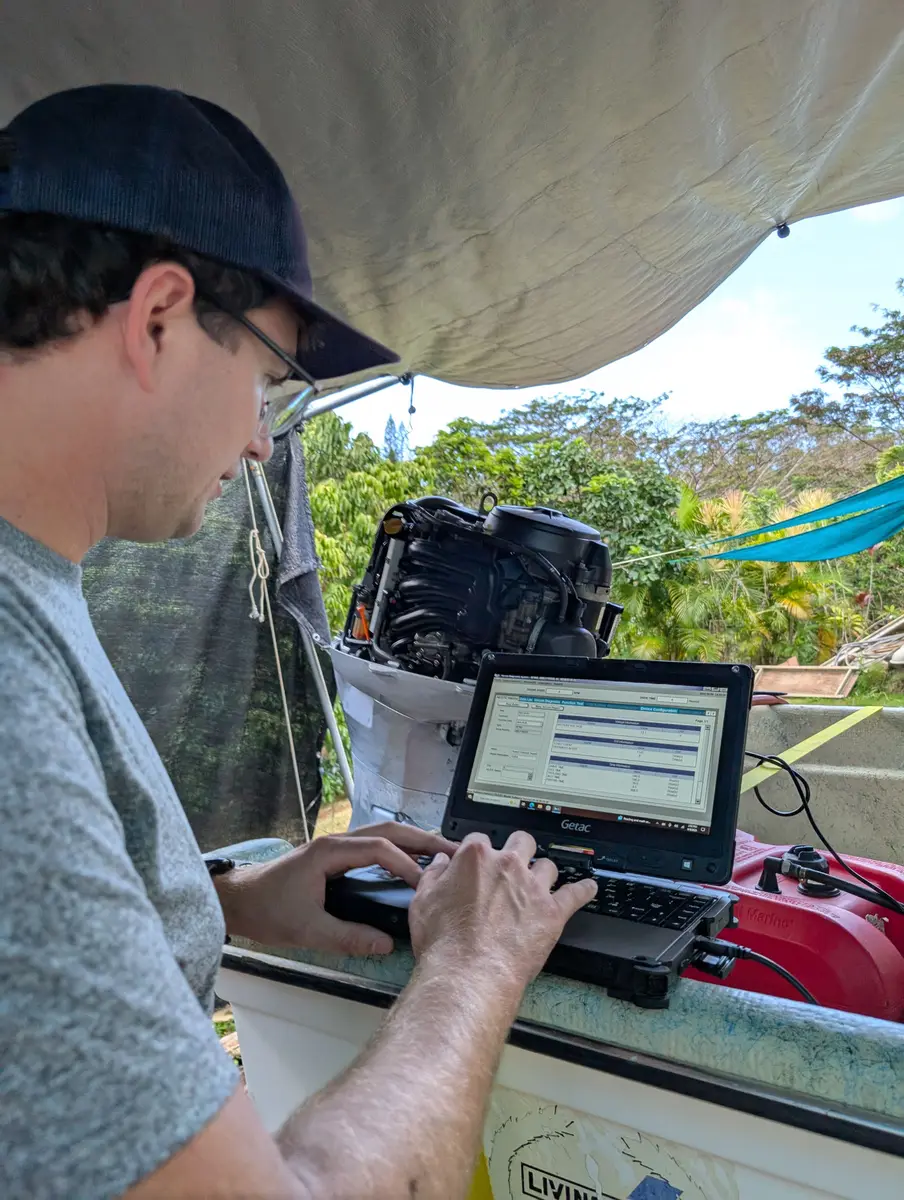
Modern outboards rely on electronic control modules and sensors. Guessing and swapping parts can cost more than finding the real cause. A diagnostic scan with the factory software reads stored fault codes and live sensor data, and often finds the problem in minutes.
Our diagnostic visit includes up to 1.5 hours at your boat anywhere on Oʻahu, with no travel fee. If it is a quick fix, we usually do it right then.